

Loading…

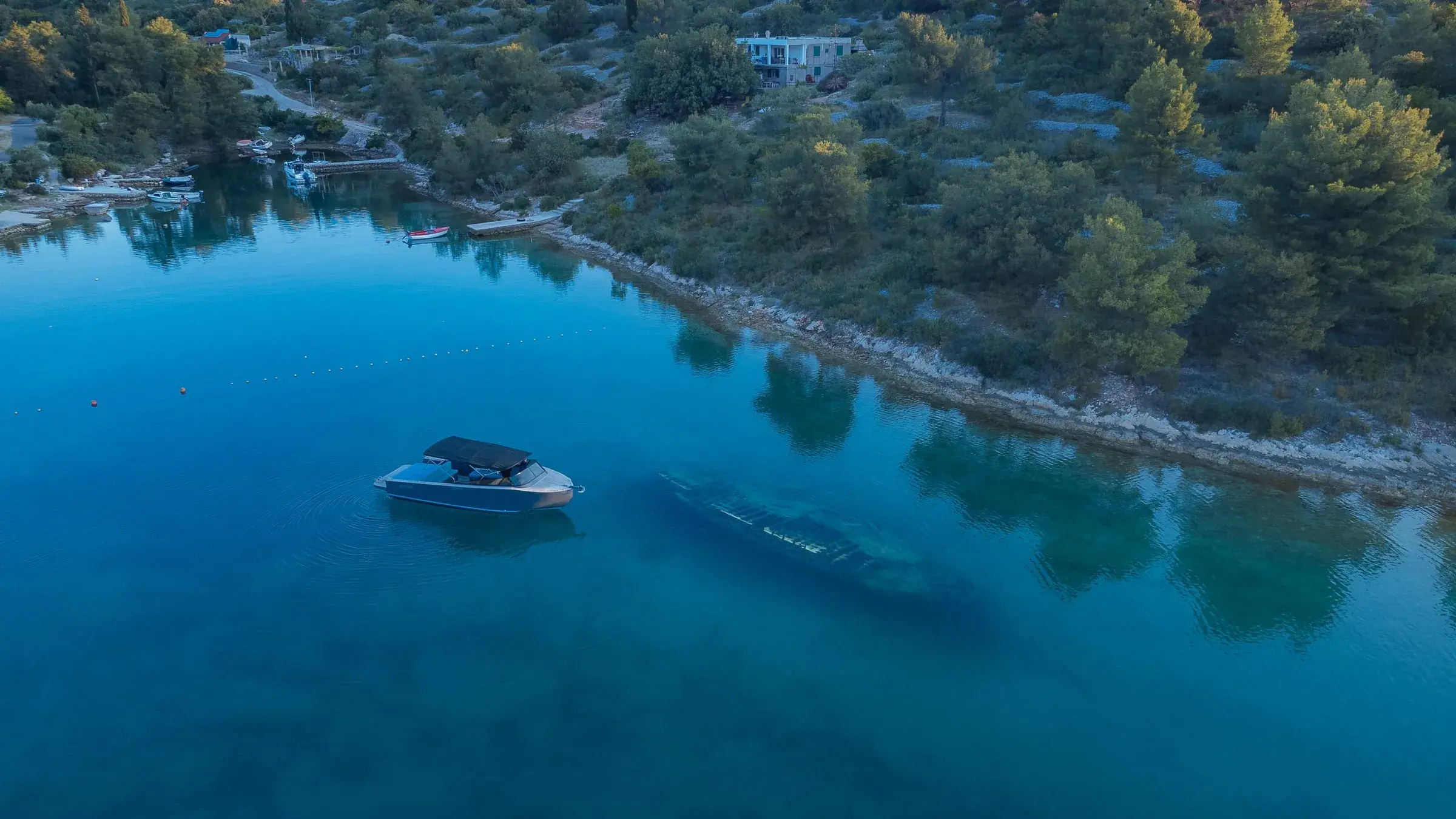
Whether you're here for a few hours, arriving by cruise ship, or spending a week exploring the region, Split is the perfect starting point for discovering some of Croatia’s most spectacular coastal scenery.
Split is more than a beautiful waterfront city. More than 1,700 years of history sit alongside lively cafés, local markets, beaches, forested hills, and some of Croatia's clearest water. You can spend the morning walking through a Roman palace, swim in the Adriatic in the afternoon, and finish the day watching the sun disappear behind the islands.
While Split is often the starting point for exploring Dalmatia, the city itself deserves time to discover.
Whether you're visiting for a few hours, arriving on a cruise ship, or spending a week in the region, these are some of the best things to do in Split.
No visit to Split is complete without exploring Diocletian's Palace.
Built for the Roman Emperor Diocletian more than 1,700 years ago, the palace is still at the heart of everyday life in Split. Ancient walls surround cafés, restaurants, shops, courtyards, and some of the city's busiest streets.
Take your time wandering through the historic centre and don't be afraid to leave the main streets behind.
Make sure to see:
Peristyle Square
The Cathedral of Saint Domnius
The palace cellars
The Golden Gate
The narrow streets around the Old Town
The best thing about the palace is that it doesn't feel like a traditional museum. People live, work, eat, and meet inside its ancient walls.
Local Tip: Visit early in the morning if you'd like to explore the palace before the busiest crowds arrive.
Split's Riva waterfront is where the city slows down.
Palm trees line the promenade, with cafés and restaurants overlooking the harbour and the Adriatic. It's an easy place to spend an hour with a coffee, watch boats come and go, or simply enjoy the atmosphere.
The Riva becomes particularly lively in the evening, when locals and visitors gather for drinks, dinner, and a walk along the sea.
You don't need a plan here.
Sometimes the best way to experience the Riva is simply to find a table, order a coffee, and watch the city go by.
Local Tip: Don't rush your coffee. Sitting and enjoying the waterfront is part of the Split experience.
If the Old Town starts to feel busy, head towards Marjan Hill.
Often described as the green lungs of Split, Marjan is covered in pine forest and walking paths, with viewpoints overlooking the city, coastline, and nearby islands.
You can spend several hours exploring the hill, but even a shorter walk is worthwhile.
The higher viewpoints offer some of the best views of Split, particularly when the weather is clear.
Local Tip: Late afternoon is a great time to visit. Temperatures are usually more comfortable, and the changing light over the Adriatic makes the views even better.
Food is an important part of experiencing Split.
Dalmatian cooking is simple, Mediterranean, and closely connected to the sea. Fresh fish, seafood, olive oil, vegetables, local herbs, and grilled meats feature heavily on menus throughout the city.
Some local dishes and products worth trying include:
Black risotto
Grilled fresh fish
Octopus salad
Peka
Soparnik
Dalmatian prosciutto
Local olive oil
Dalmatian wines
For a more traditional experience, look for a local konoba rather than choosing a restaurant purely because it's on the busiest street.
And if there's a daily special, ask what the kitchen recommends.
Local Tip: Some of the best meals are the simplest ones. Fresh fish, good olive oil, local wine, and a table outside can be all you need.
One of the best ways to experience Split is to leave the city behind for a few hours and see the Adriatic from the water.
Split is surrounded by islands, hidden coves, historic coastal towns, and beautiful swimming spots. Depending on the tour, you can spend the day:
Swimming in the Blue Lagoon
Exploring Trogir
Visiting Hvar
Discovering the Pakleni Islands
Exploring Šolta
Snorkelling in clear Adriatic water
Relaxing in secluded bays
A half-day tour is a good option if you're short on time, while a full-day trip gives you more freedom to combine several destinations.
You can also choose between shared excursions and private boat charters depending on your group and the type of experience you're looking for.
The best itinerary isn't necessarily the one with the most stops. Having enough time to actually swim, explore, and enjoy each destination can make a much bigger difference.
Local Tip: Ask about the group size before booking. A smaller boat can give you a very different experience from a large excursion vessel.
Not sure which type of boat tour is right for you? Read our Local's Guide to Boat Tours in Split for a closer look at the different options, destinations, and what to consider before booking.
For a more modern beach experience, head to Žnjan Beach.
Located along the eastern side of the city, Žnjan has become one of Split's most popular waterfront areas following its major redevelopment.
There's plenty of space to swim, walk along the promenade, relax by the sea, or stop for lunch and drinks.
It's a good alternative if you'd like to spend some time by the water without travelling outside Split.
Local Tip: Visit in the late afternoon when the strongest summer heat begins to fade. Stay for sunset and enjoy dinner or drinks by the sea afterwards.
For a glimpse of everyday life in Split, visit the Green Market, also known as Pazar,
Located close to Diocletian's Palace, the market is filled with stalls selling seasonal fruit and vegetables, olive oil, cheese, herbs, honey, and other local products.
It's a completely different experience from walking through the city's historic attractions.
Come in the morning when the market is at its liveliest and take your time looking through the stalls.
You may also find local products that make good gifts or ingredients for a picnic by the sea.
Local Tip: Go early for the freshest selection, and don't hesitate to ask vendors what's good that day. Seasonal produce is often the best choice.
Just a short journey from Split, Trogir is one of the most beautiful historic towns on the Dalmatian coast.
Its compact Old Town is filled with narrow stone streets, historic buildings, small squares, and a waterfront promenade.
Trogir is particularly easy to combine with a boat trip, making it possible to experience both the historic town and the Adriatic in the same day.
If you're interested in architecture and history, give yourself enough time to wander rather than simply stopping for a quick photo.
Local Tip: Trogir can get busy during the middle of the day in summer. Visiting earlier or later makes it easier to enjoy the old streets at a slower pace.
You don't need to book an activity to enjoy one of the best experiences in Split.
Find a place beside the sea and watch the sun disappear behind the islands.
You can watch from the Riva, Žnjan Beach, Marjan, or even from a boat offshore.
Each location offers something different.
From the Riva, you'll have the city and harbour around you. From Marjan, you'll see the coastline from above. From the sea, Split becomes part of the landscape as the city lights begin to appear.
Local Tip: Find your spot around 30 minutes before sunset. The light often becomes more beautiful before the sun actually reaches the horizon.
For a different perspective on Split, make the short trip to Klis Fortress.
Perched high above the city, the fortress has played an important role in the region's history for centuries and offers spectacular views across Split, the surrounding mountains, and the Adriatic.
Fans of Game of Thrones may also recognise Klis as a filming location used for Meereen.
The fortress is particularly rewarding if you're interested in history and photography, but the panoramic views alone make the journey worthwhile.
Local Tip: Visit in the morning or later in the afternoon during summer to avoid the strongest midday heat. If you're driving, consider combining Klis with a visit to nearby Salona.
A few days is enough to see the highlights, but staying longer gives you more time to experience the city at a slower pace.
If you're arriving on a cruise ship or only have a few hours, focus on the Old Town, Diocletian's Palace, the Riva, and one additional experience.
A boat tour can also be a good option if seeing the Adriatic is your priority.
With a couple of days, you can explore the historic centre, visit Marjan, spend time at the beach, enjoy local food, and take a boat trip.
This is a good amount of time for a first visit.
With more time, you can slow down and explore beyond the city.
Spend longer on the coast, visit Klis and Trogir, take a full-day boat trip, or use Split as a base for discovering more of Dalmatia.
Explore Diocletian's Palace early in the morning during summer.
Wear comfortable shoes when walking through the Old Town.
Leave some time in your itinerary without a fixed plan.
Visit local markets in the morning.
Don't spend your entire trip in the historic centre—Marjan and the coastline are worth exploring.
If you're taking a boat tour, choose an itinerary with enough time to actually enjoy each stop.
During very hot days, plan longer outdoor walks for the morning or late afternoon.
Stay by the sea for sunset whenever you can.
Ask locals where they like to eat rather than choosing a restaurant based only on its location.
Split is a city where you can combine history, food, nature, beaches, and the Adriatic without travelling far.
Walk through a Roman palace in the morning, stop for lunch in the Old Town, escape into the pine forest of Marjan, swim in the sea, and finish the day watching the sunset over the islands.
And if you have more time, don't stop at the city limits.
Some of the most memorable experiences around Split are waiting just offshore, from quiet swimming coves and historic island towns to crystal-clear lagoons and long days spent on the Adriatic.
Split gives you plenty to see.
The trick is leaving enough time to enjoy it.
“Split is best experienced at a relaxed pace. Explore the history, taste the local food, get out on the water, and leave a little room in your itinerary for the places and moments you didn't plan for.”
Every charter starts with a conversation. Tell us who's coming, how many days you have, and what matters most — we'll handle the rest.